
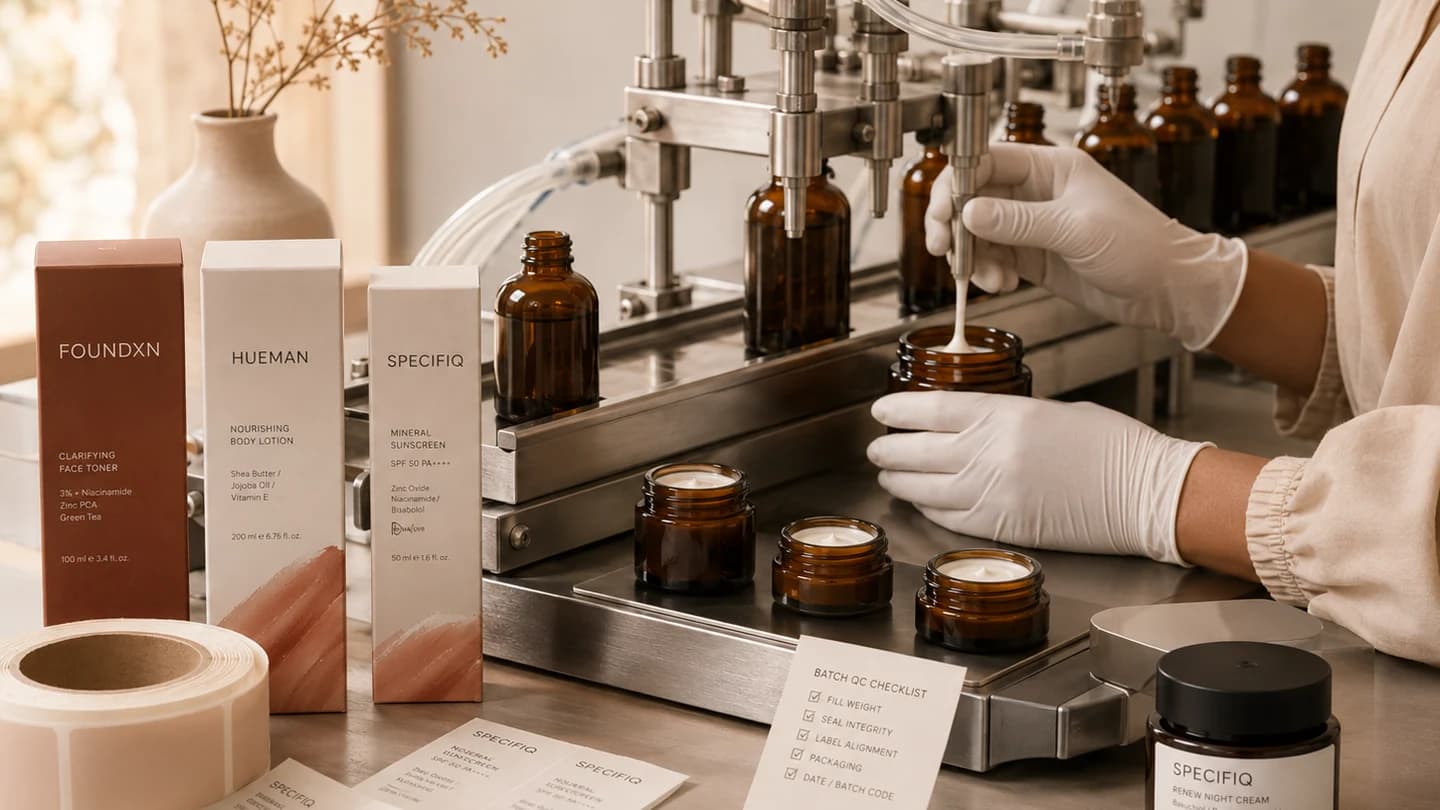
Most brands treat packaging as a design decision that happens near the end — after the formula works, once the brand identity is settled. In manufacturing it runs the other way. Packaging is an input to formulation, and OUI confirms it before development begins.
This is not a scheduling preference. The container changes what the formula has to do.
Fill size changes the formula's job
A product that sits in a 30ml bottle and a product that sits in a 250ml bottle are not the same product, even with identical chemistry. The larger pack is opened more times, over more months, in more ambient conditions. Its preservative system is asked to hold up against repeated exposure that the smaller pack never sees.
Fill size also affects headspace — the air left above the product — which influences oxidation for formulas carrying sensitive actives or unsaturated oils. Deciding fill size after formulation means re-examining decisions that were made assuming something else.
Material decides what can touch the product
Different plastics and glass behave differently against the same formula. Some materials absorb fragrance components. Some allow slow moisture or oxygen transmission. Some interact with high-oil or high-surfactant systems in ways that show up as discolouration, separation or a change in scent long after the sample was approved.
This is why compatibility review exists as a distinct step, and why it is scoped to the final agreed packaging supplied within the required testing window. Reviewing compatibility against a component you later swap out is a check that proves nothing.
Closure and dispensing method set the viscosity target
A pump, a disc cap, a flip-top, a dropper and an airless container each demand a different viscosity range. A serum that flows correctly from a dropper may be too thin for a pump to dose consistently and too thick for a fine mist.
So viscosity is not a free aesthetic choice made in the lab. It is constrained by the closure you have chosen. When a brand changes from a disc cap to a pump after approving a sample, the formula usually has to be adjusted — which means new samples, new stability considerations, and a revision round spent on something that could have been settled at brief stage.
Labels need surface area and a decision
Regulatory label content — ingredient listing, batch identification, volume, responsible-party details — needs physical space. Small or unusually shaped components constrain what can legibly appear on pack, and that constraint is easier to solve before artwork than after a print run.
The label input document we prepare works from the finalised formula and the confirmed component. Producing it against a container that later changes means producing it twice.
What this means for your timeline
- Confirm the component, fill size, closure and material before formulation development starts.
- Stock packaging is usually the most practical option for a first launch — availability is predictable and compatibility questions are narrower.
- Expect compatibility review to be scoped against the final agreed packaging, not a stand-in sample.
- If packaging must change mid-project, treat it as a development change, not an administrative one.
Packaging briefs, fill and closure requirements and compatibility review are part of OUI's work. Procurement and sourcing are included only where separately agreed in writing — so it is worth being explicit early about who is buying the components and when they will arrive.
Brands that settle packaging first tend to move through sampling in the rounds they budgeted for. Brands that leave it open tend to spend one of their two revision rounds absorbing a decision that was never a formulation problem.